
A Kansas hit-and-run accident can leave you injured, without the other driver’s insurance information, and unsure how medical bills, missed work, and vehicle damage will be handled. Kansas law requires a driver involved in a crash involving injury, death, or damage to attended property to stop, remain at the scene, provide required identifying and insurance information, and render reasonable assistance to an injured person. When a driver leaves, you may still have options through personal injury protection, uninsured motorist coverage, collision coverage, or a claim against the driver if the person is later identified.
Melinda Young Law helps injured people in Hutchinson, Kansas, and communities across the state understand available insurance coverage, preserve evidence, and evaluate the deadlines that may affect a claim.
When you are facing challenges you never expected, Melinda Young is here to help. She will work with you to build a strong case right away. Your main focus should be on your health and well-being. Let us focus on getting you the best results possible.
Fighting for You.

What Counts as a Hit-and-Run in Kansas? 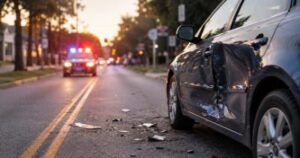
A Kansas hit-and-run can involve more than a driver leaving before everyone exchanges contact information. Kansas law requires a driver involved in a crash resulting in injury, death, or damage to attended property to stop at the scene, or as close to it as possible, return when necessary, and remain until the driver completes the duties required by law.
Those duties can include providing:
- The driver’s name and address
- The vehicle registration number
- The driver’s license or permit when requested
- The name of the liability insurance company
- The insurance policy number
- Reasonable assistance to an injured person
A driver who leaves without completing required duties may face criminal consequences. Your injury claim is a separate matter. To pursue compensation, you still need evidence about how the collision occurred, what injuries and losses resulted, and which insurance coverage applies.
What Should You Do Right After the Crash?
After a Kansas hit-and-run accident, focus first on your safety and medical needs. Call 911. Move out of active traffic if you can do so safely. Ask for emergency medical help when needed. Do not chase the fleeing vehicle because a pursuit can create another collision and remove you from evidence at the scene.
If your condition allows, record details while they are fresh:
- The color, make, model, body style, and direction of travel of the fleeing vehicle
- Any part of the license plate number
- Damage that you noticed on the other vehicle
- A description of the driver or passengers
- The location, traffic signal, lane position, and road layout
- Names and contact information for witnesses
- Nearby businesses, homes, parking lots, or intersections that may have cameras
Take photographs of your vehicle, debris, skid marks, roadway conditions, traffic controls, and visible injuries. Ask the responding officer for the report number. Write down what happened while your memory is fresh, and keep your account factual.
For more steps to take after a Kansas car accident, visit:
https://melindayounglaw.com/7-car-accident-tips/
Melinda is an asset to the city of Hutchinson and its legal community. I know she treats her clients with compassion and professionalism. It's a privilege to provide her an endorsement.
Ethan

Nicholas
Gabriel
Why Medical Care Matters Even When the Other Driver Is Gone
Medical care after a hit-and-run matters because some injuries are obvious at the scene while others become more noticeable over the following hours or days. Headaches, neck pain, back pain, numbness, dizziness, or reduced range of motion can develop after the initial shock of a collision.
Seek medical evaluation when you are injured or develop symptoms. Follow the treatment instructions that your medical providers give you. Keep records connected to your care and financial losses, including:
- Medical bills
- Discharge instructions
- Prescriptions
- Physical therapy records
- Mileage to medical appointments
- Work restrictions
- Pay records
- Written documentation of missed work
Medical records can help document when symptoms were reported, what treatment was recommended, and how the injury affected your daily life.
Common Mistakes in a Personal Injury Claim Choosing a Car Accident AttorneyRelated Videos
Can Your Own Insurance Cover a Kansas Hit-and-Run?
Your own insurance may provide coverage after a Kansas hit-and-run, depending on the policy and the facts. Kansas motor vehicle liability policies generally include personal injury protection, often called PIP. PIP is first-party coverage that can provide certain benefits after a covered motor vehicle injury without requiring you to prove the other driver’s fault before benefits become available.
Kansas PIP benefits can include categories such as:
- Medical benefits
- Disability benefits
- Rehabilitation benefits
- Substitution benefits
- Funeral benefits
- Survivor benefits
The benefits available to you depend on the policy, the type of loss, and the statutes that apply.
A hit-and-run can also raise uninsured motorist coverage issues. Kansas law generally requires uninsured motorist coverage in automobile liability policies covered by the statute. This coverage may be relevant when the at-fault driver cannot be identified or when the driver does not have applicable liability insurance.
A special rule can matter in some phantom vehicle cases. Kansas law allows an insurer to exclude or limit uninsured motorist coverage when there is no physical contact with the unidentified vehicle and there is no reliable, competent evidence from a disinterested witness proving the facts of the accident. If another driver forces you off the road without making contact, independent witness evidence can become especially valuable.
For more information about insurance issues after a Kansas car accident, visit:
Key Point: A fleeing driver does not automatically eliminate every source of recovery. Your own policy may contain coverage that applies even when the other driver is never identified.
What About Damage to Your Car?
Vehicle damage after a hit-and-run is handled differently from bodily injury in many insurance claims. Uninsured motorist bodily injury coverage is not the same as property damage coverage.
If the fleeing driver is never found, collision coverage may be a possible source for vehicle repairs or the value of a totaled vehicle, subject to your deductible and policy terms.
If police later identify the driver, you may be able to pursue a property damage claim against that driver or the driver’s insurer. Other coverage may become relevant when the vehicle was owned by another person, used for work, or connected to a business. The available claim depends on the facts and the insurance policies involved.
How Can the Fleeing Driver Be Identified?
Identifying a fleeing driver often requires several pieces of evidence that support one another. A partial license plate may become more useful when investigators can compare it with a vehicle description, camera footage, witness statements, and damage patterns.
In Hutchinson, Reno County, and other Kansas communities, useful evidence may include:
- Business surveillance cameras
- Residential doorbell cameras
- Traffic camera footage when available
- Dash camera footage from nearby vehicles
- Witness cell phone photographs or video
- Vehicle fragments left at the scene
- Police records
- Repair records if a suspect vehicle is later located
Act quickly when video may exist. Many camera systems overwrite older footage, so useful recordings can disappear before an insurance claim is resolved.
An attorney may be able to send a preservation request asking a business, property owner, or other person to retain potentially relevant footage or records.
What If Your Insurance Company Questions the Claim?
A claim under your own policy can still become disputed. Your insurer may investigate fault, medical causation, exclusions, coverage limits, notice requirements, and the value of your claimed losses.
Give timely notice of the crash and comply with reasonable policy requirements. Read documents carefully before you sign them. A medical authorization, recorded statement, release, or settlement agreement can affect your claim.
Keep your communication accurate and factual. If you do not know the answer to a question, say that you do not know rather than guessing. Keep copies of emails, letters, claim numbers, estimates, medical records, and other documents that relate to the loss.
If the insurer disputes coverage or offers a settlement that does not account for your documented losses, an attorney can review the policy, the evidence, and the basis for the insurer’s position.
What Compensation May Be Available?
Compensation after a Kansas hit-and-run depends on the driver’s identity, fault, insurance coverage, your injuries, and the terms of the policies that apply.
Potential categories of recovery may include:
- Medical expenses
- Lost income
- Reduced future earning ability
- Pain and physical limitations
- Rehabilitation costs
- Certain household or substitution services
- Vehicle repair or replacement through applicable coverage
- Towing expenses
- Rental expenses
- Other documented crash-related losses
Kansas follows a comparative negligence system. You may recover damages if your negligence is less than the causal negligence of the party or parties against whom you make the claim. Any damages awarded to you are reduced in proportion to the percentage of negligence attributed to you.
Evidence about how the collision happened can affect both fault and the value of a claim.
For a broader discussion of Kansas personal injury claims, visit:
https://melindayounglaw.com/personal-injury-tips/
How Long Do You Have to File a Claim?
Kansas generally applies a two-year limitations period to many personal injury actions. The exact deadline can depend on the facts, when the claim accrued, the parties involved, and whether an exception applies. Insurance policies can also contain notice provisions or claim requirements that arise before a lawsuit deadline.
A hit-and-run creates another timing concern because evidence can disappear long before the legal filing period ends. Camera footage can be overwritten, witnesses can become difficult to locate, memories can fade, and vehicles can be repaired or sold.
Preserving evidence early can make a major difference in a claim.
For more information about Kansas filing deadlines, visit:
How a Kansas Hit-and-Run Attorney Can Help
A Kansas hit-and-run attorney can help coordinate the insurance and evidence issues that can make these claims different from other car accident cases.
Legal work may include:
- Obtaining police and crash records
- Locating and contacting witnesses
- Seeking preservation of video evidence
- Reviewing insurance policies and coverage
- Documenting medical expenses and wage losses
- Communicating with insurance companies
- Evaluating whether another person or business may share legal responsibility
- Tracking deadlines that may affect the claim
If the fleeing driver is found, the claim may expand to include that driver’s liability insurance and other potentially applicable coverage. If the driver is never identified, the focus may remain on uninsured motorist coverage, PIP, collision coverage, and the evidence required under the applicable policies.
Speak With a Kansas Car Accident Attorney
If you were injured in a hit-and-run accident in Hutchinson, Kansas, or another Kansas community, you can get help reviewing the insurance coverage, evidence, and deadlines that may affect your options.
Melinda Young Law represents injured people in Hutchinson and communities across Kansas. The firm can review the crash, available insurance policies, medical documentation, and evidence that may help identify the fleeing driver or support a claim.
Call or text Melinda Young Law at (620) 501-8080.
You can also contact the firm here:
https://melindayounglaw.com/contact/
This article is for informational purposes only and is not legal advice. Every case is different. Consult an attorney about your specific situation.