
Spring storms in Kansas bring heavy rain, melting snow, and ice, creating dangerous conditions for pedestrians and visitors to private and commercial properties. Property owners have a legal responsibility to maintain safe conditions, and failure to do so can result in liability for injuries. This guide explains how Kansas law applies to slip and fall incidents after spring storms, factors that influence liability, steps victims should take immediately after an accident, and how Melinda Young Law assists clients in pursuing compensation for damages.
When you are facing challenges you never expected, Melinda Young is here to help. She will work with you to build a strong case right away. Your main focus should be on your health and well-being. Let us focus on getting you the best results possible.
Fighting for You.

Understanding Property Owner Liability in Kansas 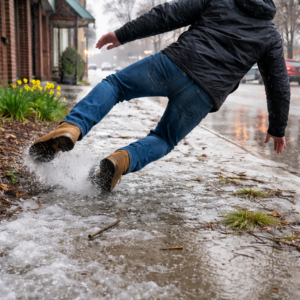
Property owners in Kansas owe a duty of care to individuals who enter their premises, and the level of that duty depends on the visitor’s status. Invitees, such as customers visiting a store, are owed the highest degree of care. Property owners must regularly inspect their premises and address hazards promptly. Licensees, including social guests, are owed a lesser degree of care, usually limited to warning them about known dangers. Trespassers generally have minimal protection, with property owners only required to avoid intentionally causing harm.
After a spring storm, liability often arises if the property owner failed to remove snow, ice, or water hazards within a reasonable timeframe, or if they did not provide adequate warnings. Courts in Kansas examine whether a property owner’s actions or inactions created a foreseeable risk that contributed to a visitor’s injury. Demonstrating negligence requires establishing that the property owner knew or should have known about the hazard, that the hazard persisted long enough to pose a danger, and that reasonable measures to mitigate the risk were not taken.
Common Hazards Following Spring Storms
Spring weather can create a variety of conditions that increase the likelihood of slips and falls. These hazards include melting snow creating icy patches on sidewalks and parking lots, accumulation of debris such as tree branches or leaves, flooded areas from heavy rainfall or clogged drains, and poor lighting that reduces visibility during early mornings or evenings. Each of these conditions can become the basis for a legal claim if a property owner fails to act with reasonable care.
For example, a commercial property that does not place warning signs near wet surfaces or fails to provide mats at entrances could be found negligent if a customer slips. Similarly, residential property owners who neglect to remove snow or ice from sidewalks used by the public or invitees could face liability. Courts often consider whether seasonal hazards were foreseeable and whether the property owner implemented practical steps to reduce risk, such as salting walkways, trimming trees, clearing debris, and ensuring adequate lighting.
Melinda is an asset to the city of Hutchinson and its legal community. I know she treats her clients with compassion and professionalism. It's a privilege to provide her an endorsement.
Ethan

Nicholas
Gabriel
Factors That Determine Liability
Liability is influenced by multiple factors. First, notice of the hazard is crucial. Property owners are expected to know or have constructive knowledge of dangerous conditions, which can be demonstrated through previous complaints, inspections, or visible accumulation of ice or debris. Second, the duration of the hazard is considered—how long it was present before the incident occurred. Third, the reasonableness of the property owner’s response is evaluated, including whether timely action was taken to mitigate risk. Finally, the concept of contributory negligence may reduce or affect recovery if the injured party’s actions contributed to the fall, such as wearing inappropriate footwear or ignoring warning signs.
Kansas courts consider all these factors when determining responsibility. The mere presence of ice or debris does not automatically create liability; it is the property owner’s knowledge and response to the hazard that often decides the outcome. For instance, a store that checks walkways frequently and responds to weather-related hazards promptly may limit or avoid liability, whereas a property owner who ignores obvious dangers increases the risk of being held accountable.
Steps to Take After a Slip and Fall
After a slip and fall, immediate action can significantly impact the outcome of any claim. First, seek medical attention and document all injuries thoroughly. Second, report the incident to the property owner or management and request an incident report. Third, document the scene using photographs or video, capturing the hazardous condition, weather, and surrounding area. Fourth, gather witness information to corroborate the circumstances of the accident. Finally, preserve any evidence, including clothing, footwear, or other items associated with the incident.
Working with a Kansas personal injury attorney such as Melinda Young Law ensures that these steps are performed correctly and promptly. Legal guidance can help in obtaining and preserving evidence, communicating with insurance companies, and calculating the full extent of damages. These damages may include medical expenses, lost income, ongoing rehabilitation costs, and compensation for pain and suffering. Early legal intervention can also prevent missteps that could compromise a claim.
Common Mistakes in a Personal Injury Claim Choosing a Car Accident AttorneyRelated Videos
Real-Life Examples of Liability
Several Kansas cases illustrate how liability is applied following spring storms. In one Hutchinson case, a shopper slipped on a wet floor left by melting snow outside a grocery store. The property owner failed to place warning signs or mats, resulting in a successful claim. In another Wichita incident, a pedestrian fell on an icy sidewalk after a thaw. Evidence showed that the city had received prior complaints about insufficient snow removal in that area, which supported the negligence claim.
These examples underscore the importance of maintaining safe conditions, particularly during seasonal weather changes. Property owners are expected to anticipate risks associated with spring storms, such as ice formation, flooding, and debris accumulation. Failure to meet this standard often forms the basis of a valid personal injury claim in Kansas.
How an Attorney Can Help
Navigating liability and compensation after a slip and fall can be complex. A skilled attorney evaluates multiple factors, including property owner responsibility, contributory negligence, and insurance coverage. Melinda Young Law assists clients by investigating accidents, collecting evidence, determining liability, calculating damages, and negotiating with insurance companies to secure fair settlements. If negotiations fail, the firm is prepared to represent clients in court.
The goal is to maximize recovery while alleviating the stress and complexity associated with legal proceedings. Kansas residents who have suffered injuries due to spring storm hazards benefit from legal representation that understands both state law and the nuances of personal injury claims.
Preventing Slip and Fall Accidents
While victims can pursue compensation, prevention remains critical. Property owners can reduce liability by implementing practical measures, including regular inspection of premises, prompt snow and ice removal, installation of anti-slip mats or surfaces, maintaining proper drainage, and providing adequate lighting. Seasonal awareness and proactive maintenance can help prevent accidents and reduce exposure to legal claims.
Internal Resources for Guidance
For those seeking additional insights on personal injury and accident claims, Melinda Young Law provides valuable resources:
- https://melindayounglaw.com/what-to-do-if-you-are-injured-in-a-slip-and-fall-accident-in-kansas/
- https://melindayounglaw.com/personal-injury-tips/
- https://melindayounglaw.com/kansas-pedestrian-accidents-and-crosswalk-safety/
If you’ve been injured in a slip and fall due to spring storms in Kansas, contact Melinda Young Law. The firm provides experienced, compassionate representation to protect your rights and help you pursue compensation. Schedule a free consultation to discuss your situation and learn how the firm can guide you through the process.
Disclaimer
This information is for educational purposes only and does not constitute legal advice. Consult an attorney about your specific circumstances.