
Rainy fall weather can make driving in Hutchinson, Kansas, more difficult because wet pavement can reduce tire traction, increase stopping distance, limit visibility, and hide hazards beneath standing water or fallen leaves. Shorter daylight hours, road spray, glare, and wet intersections can add several risks at the same time.
If you are injured in a rainy-weather crash, fault usually depends on how each driver responded to the conditions. A driver may need to slow down, leave more following distance, use headlights when required, keep a clear view through the windshield, and avoid sudden movements on wet pavement. Weather can contribute to a collision, but the evidence still matters when deciding responsibility.
Melinda Young Law helps people injured in Hutchinson and nearby Kansas communities understand how driver behavior, road conditions, evidence, insurance coverage, and Kansas fault rules may affect a car accident claim.
When you are facing challenges you never expected, Melinda Young is here to help. She will work with you to build a strong case right away. Your main focus should be on your health and well-being. Let us focus on getting you the best results possible.
Fighting for You.

Why Rain Can Make Hutchinson Roads Harder to Navigate 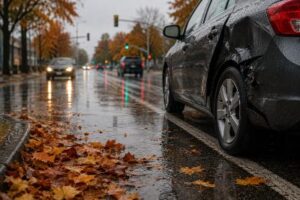
Your tires need direct contact with the roadway for braking, steering, and acceleration. When rain leaves water on the pavement, that contact can become less reliable. Wet roads can also require more room to stop, especially when traffic slows suddenly.
Fall can add another hazard through wet leaves. Leaves can collect near intersections, curbs, residential streets, shoulders, parking areas, and drainage points. When they become saturated, they can create a slick surface and may cover lane markings, pavement defects, or shallow standing water.
You may also encounter rain during darker morning or evening travel as fall daylight becomes shorter. Headlights reflecting from wet pavement, water on the windshield, and spray from nearby vehicles can make brake lights, pedestrians, bicyclists, lane markings, and traffic signals harder to see.
Common Car Accidents During Rainy Fall Weather
Rain-related crashes can happen on neighborhood streets, at busy Hutchinson intersections, and on roads throughout Reno County.
Common collisions may include:
- Rear-end accidents when a driver cannot stop in time
• Intersection crashes involving limited visibility or unsafe turns
• Lane-departure accidents after a vehicle loses traction
• Side-impact crashes during unsafe lane changes
• Multi-vehicle crashes after sudden braking
• Pedestrian accidents when visibility is reduced
• Bicycle accidents when a driver does not see a rider in time
• Loss-of-control crashes involving standing water
Rain alone does not decide fault. A claim may require a close look at speed, following distance, braking, visibility, lane position, tire condition, windshield wipers, distractions, and the actions of every driver involved.
A driver can be below the posted speed limit and still be traveling too fast for wet conditions. A driver can also leave enough room on a dry road but not enough room when stopping distances increase in the rain.
Melinda is an asset to the city of Hutchinson and its legal community. I know she treats her clients with compassion and professionalism. It's a privilege to provide her an endorsement.
Ethan

Nicholas
Gabriel
Drivers Need to Adjust to Road and Weather Conditions
Kansas drivers are expected to use reasonable care based on the conditions they face. A posted speed limit does not mean that the posted speed is appropriate in every situation.
During steady rain, standing water, reduced visibility, or heavy traffic, you may need to reduce speed, leave more space between vehicles, and allow more time for braking.
Consider a driver approaching stopped traffic in Hutchinson during steady rain. The driver is traveling at the posted speed but leaves very little space between vehicles. Traffic ahead stops, the driver brakes, and the vehicle slides into the car in front.
The rain may have increased the stopping distance. The claim would still examine whether the driver used reasonable care under the conditions.
You can learn more about Kansas car accident claims here:
https://melindayounglaw.com/kansas-car-accident-lawyers/
How Hydroplaning Can Contribute to a Crash
Hydroplaning can occur when water interferes with the contact between your tires and the pavement. When that happens, steering and braking control can be reduced for a period of time.
Several factors can affect hydroplaning risk, including vehicle speed, the amount of water on the road, tire tread, and tire condition.
If a crash involves hydroplaning, the investigation may examine whether the driver slowed for visible water, maintained the tires, made a sudden steering movement, or reacted in a way that created another danger.
For example, a driver who reaches pooled water may abruptly change lanes. That movement can lead to a second collision if another vehicle is already beside the driver.
Common Mistakes in a Personal Injury Claim Choosing a Car Accident AttorneyRelated Videos
Wet Weather Can Reduce Visibility
Rain does not need to be severe to make it harder to see.
Water on a windshield can blur your view. Road spray from larger vehicles can temporarily block sight lines. Reflections from headlights and traffic signals can make wet pavement harder to read, especially during darker morning and evening hours.
When you cannot clearly see traffic conditions ahead, reducing speed can give you more time to react.
Visibility deserves extra attention near:
- Intersections
• Crosswalks
• School zones
• Parking lots
• Highway entrances
• Construction areas
• Areas with regular pedestrian or bicycle traffic
Distractions can use up reaction time when visibility is already reduced. Looking at a phone, adjusting navigation, reaching for an item, or taking your eyes from the road can make a wet-weather hazard harder to avoid.
What Evidence Can Help After a Rainy-Weather Crash?
Weather conditions can change quickly after a collision. Rain may stop, pooled water may drain, leaves may move, and vehicles may be removed before an insurance adjuster or attorney can inspect the scene.
Evidence gathered close to the time of the crash can help document the conditions you faced.
Wet-weather evidence can disappear quickly. Photograph conditions only when you can do so safely.
Useful evidence may include:
- Photographs of the vehicles and damage
• Photographs of wet pavement and standing water
• Images showing leaves, debris, lane markings, intersections, and traffic signs
• Dash-camera footage
• Nearby surveillance footage
• Witness names and contact information
• Police reports
• Vehicle maintenance and repair records
• Tire condition
• Weather information for the time of the collision
• Medical records
• Records showing missed work or lost income
Photograph the scene only when you can do so safely.
Never stand in an active traffic lane or remain in a dangerous location to take a photograph.
What to Do After a Rain-Related Hutchinson Car Accident
Your first concern after a collision should be safety and medical care.
After a rainy-weather crash:
- Check yourself and your passengers for injuries.
• Call 911 when someone may be injured or the crash creates a traffic hazard.
• Move to a safer location when you can do so lawfully and safely.
• Exchange identifying and insurance information with the other driver.
• Photograph the vehicles, roadway, standing water, leaves, signs, and nearby conditions.
• Collect witness names and contact information.
• Look for nearby businesses, homes, or vehicles that may have video.
• Seek medical attention for injuries or new symptoms.
• Report the crash to your insurer as required by your policy.
• Give accurate information and avoid guessing about facts you do not know.
Avoid arguing about fault at the scene. You may not yet know whether another driver was distracted, how fast a vehicle was traveling, whether video exists, or what other evidence may become available.
Some injuries become more noticeable after the immediate stress of a crash decreases. Medical records can also help connect your symptoms and treatment to the collision.
Kansas Comparative Fault Can Affect Compensation
Kansas uses a modified comparative fault system. More than one person can share responsibility for a crash.
If your share of fault is less than 50 percent, your recoverable damages may be reduced by your percentage of fault. If you are 50 percent or more at fault, you generally cannot recover damages from another responsible party.
Rainy-weather crashes can involve shared-fault arguments. One driver may have followed too closely while another made an unsafe lane change. Another collision may involve speed, standing water, worn tires, poor visibility, or several factors at once.
Evidence can help show whether the weather was the main cause of the crash or whether a driver’s choices contributed to the collision.
You can read more about Kansas personal injury claims here:
https://melindayounglaw.com/kansas-personal-injury-lawyers/
What Compensation May Be Available?
The compensation available after a Kansas car accident depends on your injuries, the evidence, insurance coverage, fault allocation, and other facts of the claim.
A supported claim may include:
- Medical treatment
• Reasonably supported future medical care
• Lost wages
• Reduced earning ability
• Vehicle repair or replacement
• Towing and rental costs
• Damaged personal property
• Pain and physical limitations
• Loss of normal activities
• Other documented accident-related expenses
No attorney can promise the outcome or value of a particular claim.
Kansas generally applies a two-year filing period to many personal injury actions, but exceptions and different deadlines can apply. The correct deadline depends on the facts and legal claims involved.
You can review the firm’s guide to Kansas personal injury filing deadlines here:
How a Hutchinson Car Accident Attorney Can Help
Rain-related crashes can lead to disputes about speed, stopping distance, visibility, tires, standing water, road conditions, and the actions of each driver.
A car accident attorney can help you investigate the collision, preserve available evidence, locate witnesses, review photographs and video, examine insurance coverage, collect medical records, document lost income, and respond to arguments that you caused part of the crash.
Early investigation can be useful because wet-weather evidence may change quickly after the rain stops.
You can learn more about personal injury representation in Hutchinson here:
https://melindayounglaw.com/personal-injury-lawyers-in-hutchinson-ks/
Ways to Reduce Fall Driving Risks in the Rain
You cannot control the weather, but you can adjust how you drive when conditions change.
During rainy fall conditions:
- Reduce speed when traction or visibility is limited.
• Leave more distance between your vehicle and the vehicle ahead.
• Avoid sudden braking and abrupt steering.
• Keep your tires properly maintained.
• Replace worn windshield wipers.
• Use headlights when conditions require them.
• Watch carefully for pedestrians and bicyclists.
• Avoid cruise control when traction is uncertain.
• Keep your attention on the road.
• Avoid driving through standing water when you cannot determine its depth.
If the rain becomes so heavy that you cannot see the roadway clearly, move to a lawful, safe place away from moving traffic before stopping.
Speak With a Hutchinson Car Accident Attorney
A rainy-weather collision can leave you managing medical appointments, vehicle repairs, missed work, and insurance questions while evidence from the scene is already changing.
Melinda Young Law has an office in Hutchinson, Kansas, and offers free consultations for personal injury matters. The firm can review what happened, discuss evidence that may need to be preserved, explain how Kansas fault rules may apply, and help you understand the legal options supported by your circumstances.
Call or text Melinda Young Law at 620-501-8080.
Contact Melinda Young Law online:
https://melindayounglaw.com/contact/
Learn more about attorney Melinda Young:
https://melindayounglaw.com/attorney-melinda-young/
Melinda Young Law serves injured people in Hutchinson and nearby Kansas communities.
This article is for informational purposes only and is not legal advice. Consult an attorney about your specific situation.